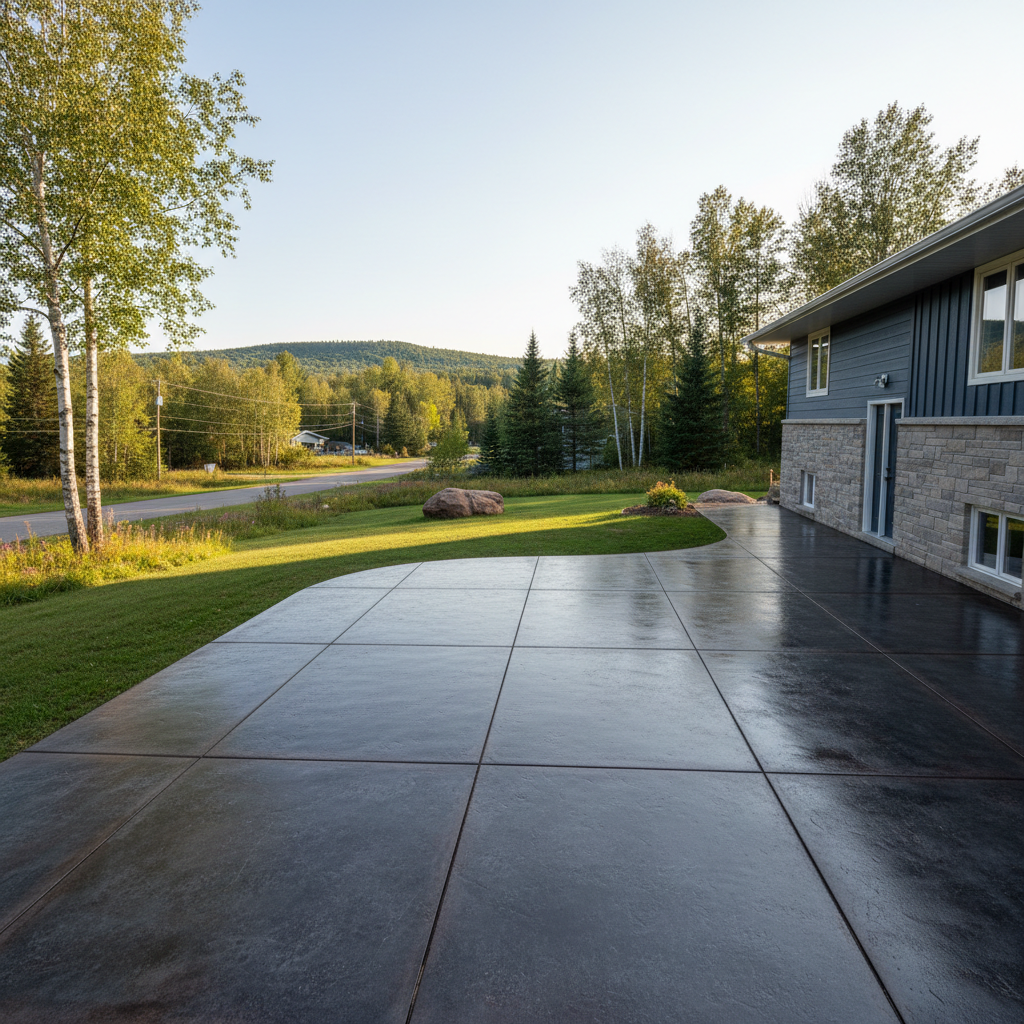
You're probably wondering if concrete staining is just a fancy way to paint your floor, right? Honestly, it's way more than that, especially here in Hermantown. I've been on countless projects over the years, and I can tell you, doing it right means really understanding our specific conditions, not just slapping on some color.
Why Staining Works Better Than Painting in Our Climate
Let's get one thing straight first: staining isn't painting. Paint just sits on top of the concrete. It's prone to chipping, peeling, and wearing down, particularly with our freeze-thaw cycles and all the salt we spread on driveways and sidewalks. Stains, however, actually soak into the concrete. They react chemically with the lime in the concrete, creating a see-through, permanent color that won't chip or fade like paint would. It's a much tougher finish, which is exactly what you need when you're battling Hermantown winters and the occasional muggy summer.
Think about your garage floor for a second. You're dragging in snow, slush, gravel, and salt all winter long. A painted floor wouldn't stand a chance. But a properly stained and sealed floor? That'll hold up. The same goes for your patio, where you're constantly moving furniture around, or a basement floor that might see some moisture. It just makes sense.
Common Hermantown Staining Projects
I get calls for all sorts of staining jobs around here. Garages are a big one, naturally. People want to spruce up that utilitarian space, make it look cleaner, and protect it from spills. We've even done some beautiful metallic epoxy floors that start with a stained base, giving them a truly unique, high-end look.
Basement floors are another popular spot. A lot of homes in Hermantown, especially those built in the 70s and 80s in neighborhoods like the Hermantown Hills, have unfinished basements that homeowners are finally getting around to finishing. Staining is a fantastic way to create a durable, low-maintenance floor that looks great, whether you're aiming for an industrial vibe or something a bit warmer with a rich, earthy tone. It's also a smart choice for a basement because it handles moisture much better than carpet or wood laminate.
Patios and outdoor living spaces are also prime candidates. Imagine a plain gray concrete patio transformed into something that looks like natural stone or aged leather. It really elevates the whole outdoor area, doesn't it? And because the stain penetrates, it won't peel off from rain or sun exposure.
Local Conditions Matter: What I've Learned
Here's where local expertise really comes into play. Our soil conditions in Hermantown, with that heavy clay in some areas, can affect how concrete cures and, consequently, how it accepts a stain. You've got to know how to prep the surface properly. If you don't clean it right, if there's any oil or old sealer residue, the stain won't penetrate evenly, and you'll end up with a splotchy mess. I've seen it happen when folks try to DIY or hire someone who doesn't know what they're doing.
Also, the age and condition of your concrete are huge factors. Older concrete might have more surface imperfections or have been exposed to more chemicals over time. We've got to assess that before we even think about color. Sometimes, a light grind or a specific cleaning agent is needed to make sure the stain takes uniformly.
And then there's the weather. You can't stain concrete when it's too cold or too hot, or if there's a chance of rain. We're always watching the forecast. We've got a shorter season for outdoor work up here, so timing is everything. You want a consistent temperature for the stain to cure properly. That's why working with a local company like Primetime Concrete Coatings, who understands these nuances, is so important. We're not just guessing; we know what works in our environment.
Beyond the Color: Sealing and Maintenance
Once the staining is done, the job isn't over. You absolutely need a good sealer. The sealer protects the stained surface from abrasion, spills, and UV damage. For outdoor areas, you'll want a UV-resistant sealer that can handle our intense summer sun and winter elements. For indoor spaces, especially high-traffic areas, a durable urethane or epoxy sealer might be the best bet.
Maintenance is pretty straightforward: regular cleaning with a mild, pH-neutral cleaner. Avoid harsh chemicals or abrasive scrubbers, as they can damage the sealer over time. With proper care, a stained concrete floor can last for decades, looking fantastic the whole time.
So, if you're thinking about sprucing up your concrete, don't just think about color. Think about durability, local conditions, and getting it done right. It's an investment that pays off, especially when you consider how long it'll last compared to other flooring options.