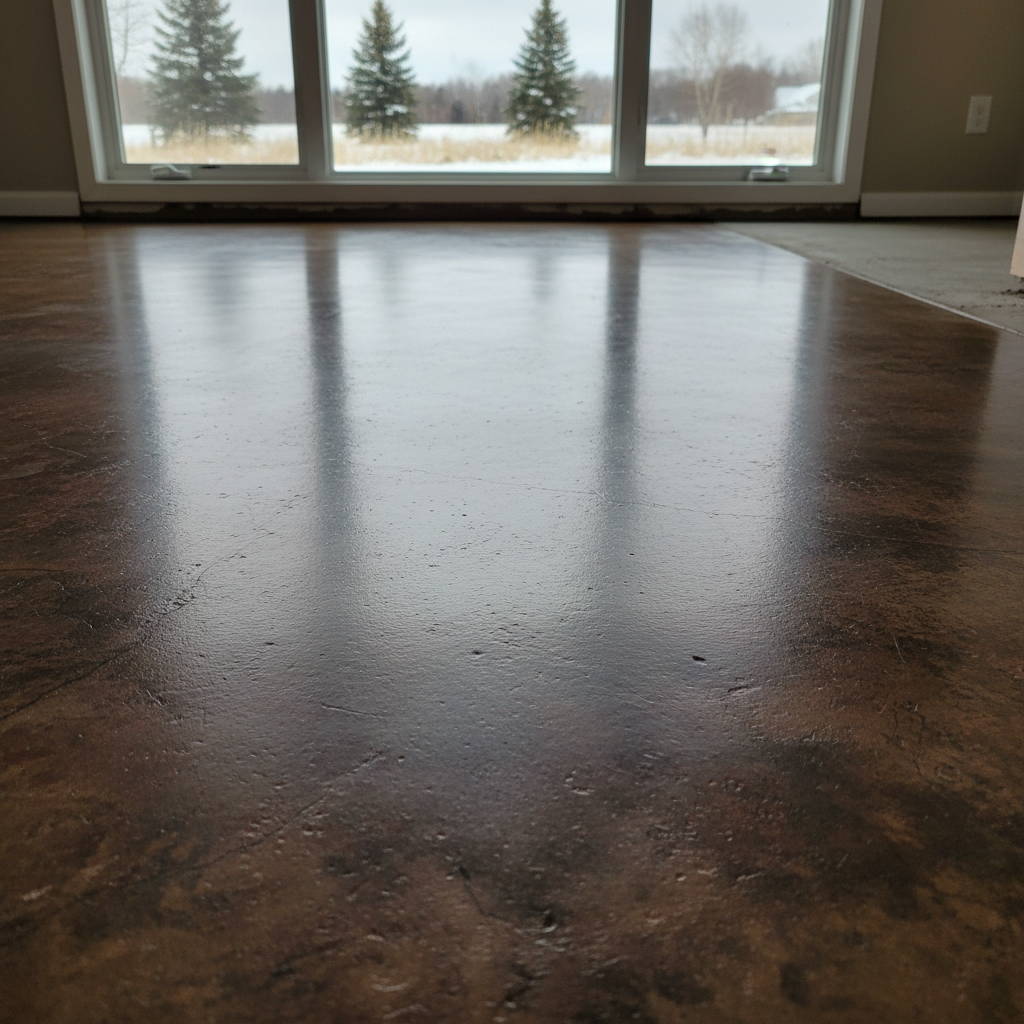
Staining concrete is one of the best ways to upgrade a dull gray slab into something that actually looks custom-built. Whether you are tackling a basement floor or an outdoor patio up here on the ridge, the process takes patience and a solid understanding of how local conditions affect your materials. Homeowners must look at what needs to be done before starting, what happens during the actual application, and when they are better off handing the project over to a professional crew like Primetime Concrete Coatings.
Before You Start: Assessing Your Concrete
You cannot just slap stain onto any old slab and expect a showroom finish. The condition of your concrete dictates everything. If your slab has grease spots, old paint, or deep pitting from years of winter road salt tracking in, the stain will not absorb evenly. Up here in Hermantown, our heavy soils and dramatic freeze-thaw cycles mean concrete takes a beating. Take a close look at your surface.
- Check for moisture issues by taping a plastic square to the floor for 24 hours.
- Scrub away any surface dirt, oil, or previous sealers.
- Repair cracks and spalling before even thinking about color.
If the slab is relatively clean, flat, and structurally sound, you might be a good candidate for a do-it-yourself weekend project. If it is crumbling, heavily contaminated, or cracking due to shifting subgrades, stop right there.
During the Project: Prep, Application, and Timing
Getting your hands dirty with a Staining concrete project means respecting the chemistry. You generally have two choices: acid-based stains that chemically react with tools and minerals to create earthy, mottled tones, or water-based stains that offer a wider palette of opaque or translucent colors.
Surface prep is ninety percent of the battle. You will need to etch or thoroughly clean the concrete so the pores are open. Renting a floor scrubber or a commercial pressure washer helps immensely, but make sure the concrete dries out completely before applying anything. If you are working in a damp basement or during a rainy northern Minnesota stretch, getting that moisture level down can take 3 to 5 days.
Applying the stain requires a steady hand and consistent strokes to avoid pooling or overlap marks. Once the stain reacts and dries, you have to neutralize the surface, rinse it clean, and apply a heavy-duty sealer. Miss the sealing step, and your new floor will not stand a chance against everyday wear.
DIY vs. Calling a Pro
Can you stain concrete yourself? Absolutely. If you have a small, straightforward patio or a low-stakes storage room, renting the tools and buying a do-it-yourself kit is a fun way to spend a weekend. You will save some upfront labor cash and learn a lot about masonry work.
However, larger spaces like expansive basements or multi-car garages require commercial-grade equipment to grind away imperfections and achieve uniform coverage. Mistakes with acid stains, such as uneven blotches or drip lines, are permanent and nearly impossible to fix without aggressive grinding. For homes and businesses in Hermantown, Primetime Concrete Coatings provides Floor Refinishing Service options to ensure the prep, staining, and protective topcoats are locked in tight against our local climate.